Article
Article
Gaming the Machines: How Job Seekers Are Cheating ATS Resume Screenings
In the digital hiring era, resumes are often filtered long before a human recruiter ever sees them. Applicant Tracking Systems (ATS) — software platforms used by organizations to scan, rank, and filter resumes — have become a gatekeeper for job seekers. But with every gatekeeper comes someone who learns how to pick the lock. A growing trend among candidates is manipulating ATS algorithms by embedding hidden text—content that’s invisible to the human eye but readable by machine scanners. The tactic aims to artificially inflate keyword scores and push resumes higher in recruiter shortlists.
In the digital hiring era, resumes are often filtered long before a human recruiter ever sees them. Applicant Tracking Systems (ATS) — software platforms used by organizations to scan, rank, and filter resumes — have become a gatekeeper for job seekers. But with every gatekeeper comes someone who learns how to pick the lock. A growing trend among candidates is manipulating ATS algorithms by embedding hidden text—content that’s invisible to the human eye but readable by machine scanners. The tactic aims to artificially inflate keyword scores and push resumes higher in recruiter shortlists.
How the ATS Keyword System Works
ATS tools parse resumes and assign scores based on the presence and frequency of relevant keywords. For instance, if a job posting mentions “Python,” “machine learning,” and “data analytics”, a resume with those terms repeated across sections is more likely to appear at the top of recruiter dashboards.
This automated ranking process means that even qualified candidates can be filtered out if they don’t use the “right” words — and conversely, it allows unqualified applicants to game the system by strategically inserting keywords.
The New Tactic: Hidden Keywords Using Color Manipulation
The most recent trend involves color-matching text to background in a PDF resume. This renders the text invisible to the human reader, but not to the machine parser.
For example, a candidate might write:
Python Python Python Python Machine Learning Data Analytics SQL AWS Azure Tableau
Python Python Python Python Machine Learning Data Analytics SQL AWS Azure Tableau
and then change the font color to white against a white background.
When viewed or printed, this section disappears completely, leaving a clean and professional-looking resume. But the ATS still “reads” it as a keyword-dense document, often ranking it significantly higher than honest submissions.
Impact on Employers
This manipulation has several consequences (including significant financial impacts).
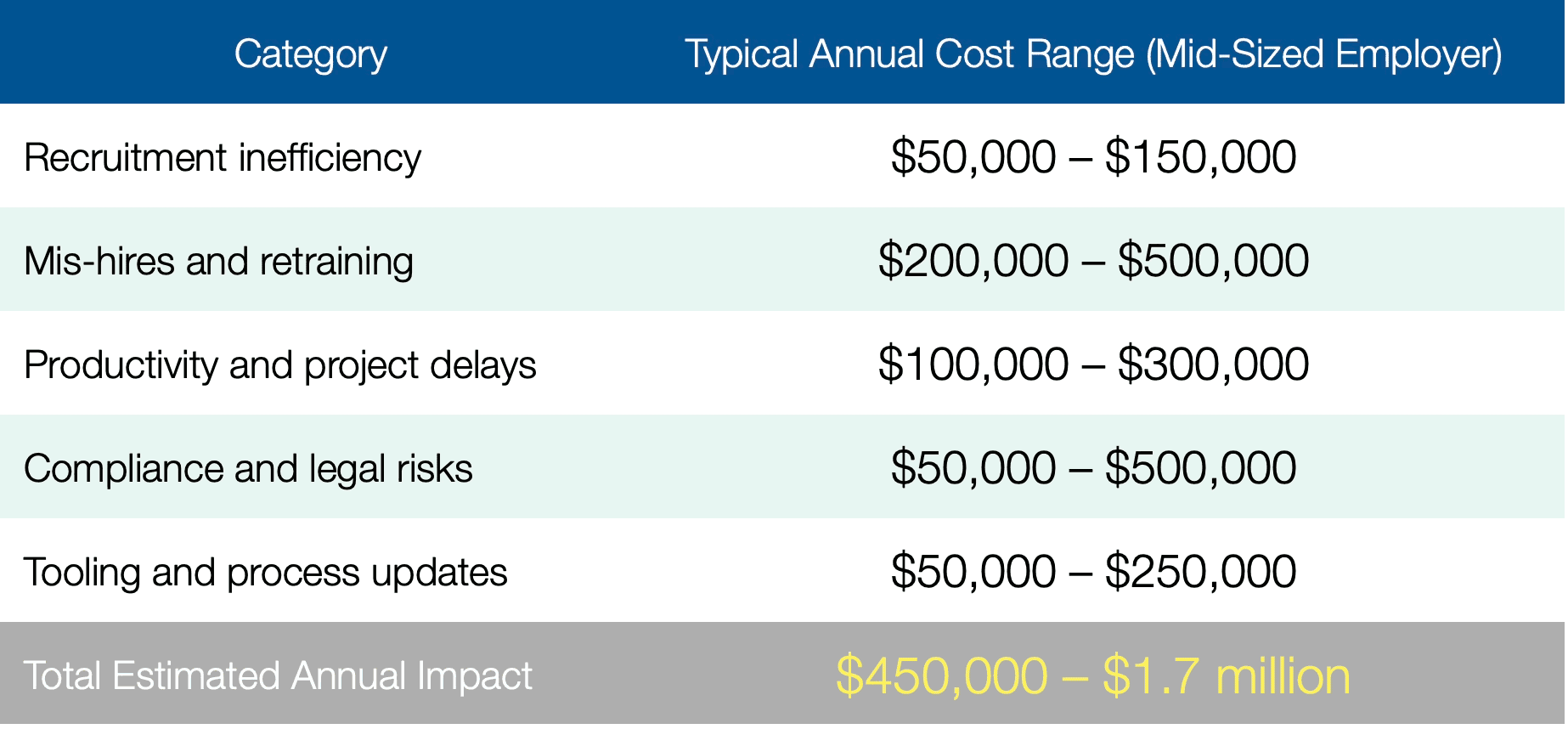
Potential financial impact of resume forgery on Employers
1 - Increased Recruitment Costs: When unqualified candidates rise to the top of ATS rankings:
Interview inefficiency: Recruiters spend time interviewing candidates who only appear qualified on paper.
Estimated cost: $500–$1,500 per wasted interview cycle.
Extended hiring cycles: Each misleading hire can delay filling critical positions by 2–4 weeks, costing productivity and increasing interim staffing or overtime costs.
Impact: $5,000–$15,000 per delayed position (depending on seniority).
2 - Mis-Hire and Training Losses: If an ATS-gamed candidate is hired but lacks the claimed skills:
Mis-hire cost: The Society for Human Resource Management (SHRM) estimates a bad hire can cost 3–5x the employee’s annual salary.
For example, a mid-level engineer earning $80,000 may cost $240,000–$400,000 in lost productivity, retraining, and re-hiring.
Onboarding and training losses: Additional $10,000–$25,000 spent before realizing skill mismatch.
3 - Productivity and Team Disruption: Unqualified hires can lower team performance and slow project timelines.
Productivity loss: Teams underperform by 10–20% while compensating for the bad hire’s learning curve.
Opportunity cost: Projects delayed by weeks or months can translate to missed revenue or client penalties.
4 - Reputational and Compliance Risks
Client trust erosion: In consulting or technical roles, underqualified staff can jeopardize client contracts.
Regulatory risk: In industries like finance, healthcare, or defense, falsified qualifications may lead to audit failures or penalties.
Example: Financial institutions have faced fines exceeding $500,000 for compliance lapses tied to unverified employee credentials.
5 - Technology and Process Rework: To mitigate these manipulations, employers often invest in:
Enhanced resume screening tools like docLenz (by Trace)
AI audit and validation software to cross-check resumes with LinkedIn or public data like Trace
Estimated investment: $50,000–$250,000 annually for large enterprises.
How Recruiters Can Detect ATS Gaming
docLenz, from Trace, is an AI-powered digital document fraud detection platform that safeguards your organization against forgeries. Built on proprietary AI algorithms, it detects even the most subtle manipulations in PDFs and scanned images—frauds that traditional checks or the human eye often miss.
Whether integrated seamlessly into your existing business workflows or used for on-demand checks, docLenz gives you instant, evidence-backed verification. From employee background verification to vendor due diligence and customer onboarding, you can now take control of fraud risk at every stage of your business.
Resume forgeries can be identified and reported within seconds.
Ethical Implications
While job seekers often justify this as “leveling the playing field,” it raises ethical concerns. Such practices blur the line between optimization and deception. In the long run, it harms trust in the hiring process and diminishes the value of ATS systems designed to promote efficiency and fairness.
Conclusion
The rise of hidden-text keyword manipulation underscores a fundamental problem in automated hiring: systems designed to assess merit can be tricked by design tricks.
As AI-driven recruiting becomes more prevalent, both job seekers and employers must adapt — job seekers by focusing on genuine skill representation, and employers by building smarter, more transparent screening systems.
#resumeForgery #ATSGaming #HumanGamingAI #jobSeekersGamingATS #FraudDetection #ATSFraud #HiringEthics #RecruitmentTechnology #ResumeCheating #HRCompliance #TalentAcquisition #FutureOfHiring #RecruiterAwareness #JobSearchTrends #WorkplaceIntegrity
How the ATS Keyword System Works
ATS tools parse resumes and assign scores based on the presence and frequency of relevant keywords. For instance, if a job posting mentions “Python,” “machine learning,” and “data analytics”, a resume with those terms repeated across sections is more likely to appear at the top of recruiter dashboards.
This automated ranking process means that even qualified candidates can be filtered out if they don’t use the “right” words — and conversely, it allows unqualified applicants to game the system by strategically inserting keywords.
The New Tactic: Hidden Keywords Using Color Manipulation
The most recent trend involves color-matching text to background in a PDF resume. This renders the text invisible to the human reader, but not to the machine parser.
For example, a candidate might write:
Python Python Python Python Machine Learning Data Analytics SQL AWS Azure Tableau
and then change the font color to white against a white background.
When viewed or printed, this section disappears completely, leaving a clean and professional-looking resume. But the ATS still “reads” it as a keyword-dense document, often ranking it significantly higher than honest submissions.
Impact on Employers
This manipulation has several consequences (including significant financial impacts).
Potential financial impact of resume forgery on Employers
1 - Increased Recruitment Costs: When unqualified candidates rise to the top of ATS rankings:
Interview inefficiency: Recruiters spend time interviewing candidates who only appear qualified on paper.
Estimated cost: $500–$1,500 per wasted interview cycle.
Extended hiring cycles: Each misleading hire can delay filling critical positions by 2–4 weeks, costing productivity and increasing interim staffing or overtime costs.
Impact: $5,000–$15,000 per delayed position (depending on seniority).
2 - Mis-Hire and Training Losses: If an ATS-gamed candidate is hired but lacks the claimed skills:
Mis-hire cost: The Society for Human Resource Management (SHRM) estimates a bad hire can cost 3–5x the employee’s annual salary.
For example, a mid-level engineer earning $80,000 may cost $240,000–$400,000 in lost productivity, retraining, and re-hiring.
Onboarding and training losses: Additional $10,000–$25,000 spent before realizing skill mismatch.
3 - Productivity and Team Disruption: Unqualified hires can lower team performance and slow project timelines.
Productivity loss: Teams underperform by 10–20% while compensating for the bad hire’s learning curve.
Opportunity cost: Projects delayed by weeks or months can translate to missed revenue or client penalties.
4 - Reputational and Compliance Risks
Client trust erosion: In consulting or technical roles, underqualified staff can jeopardize client contracts.
Regulatory risk: In industries like finance, healthcare, or defense, falsified qualifications may lead to audit failures or penalties.
Example: Financial institutions have faced fines exceeding $500,000 for compliance lapses tied to unverified employee credentials.
5 - Technology and Process Rework: To mitigate these manipulations, employers often invest in:
Enhanced resume screening tools like docLenz (by Trace)
AI audit and validation software to cross-check resumes with LinkedIn or public data like Trace
Estimated investment: $50,000–$250,000 annually for large enterprises.
How Recruiters Can Detect ATS Gaming
docLenz, from Trace, is an AI-powered digital document fraud detection platform that safeguards your organization against forgeries. Built on proprietary AI algorithms, it detects even the most subtle manipulations in PDFs and scanned images—frauds that traditional checks or the human eye often miss.
Whether integrated seamlessly into your existing business workflows or used for on-demand checks, docLenz gives you instant, evidence-backed verification. From employee background verification to vendor due diligence and customer onboarding, you can now take control of fraud risk at every stage of your business.
Resume forgeries can be identified and reported within seconds.
Ethical Implications
While job seekers often justify this as “leveling the playing field,” it raises ethical concerns. Such practices blur the line between optimization and deception. In the long run, it harms trust in the hiring process and diminishes the value of ATS systems designed to promote efficiency and fairness.
Conclusion
The rise of hidden-text keyword manipulation underscores a fundamental problem in automated hiring: systems designed to assess merit can be tricked by design tricks.
As AI-driven recruiting becomes more prevalent, both job seekers and employers must adapt — job seekers by focusing on genuine skill representation, and employers by building smarter, more transparent screening systems.
#resumeForgery #ATSGaming #HumanGamingAI #jobSeekersGamingATS #FraudDetection #ATSFraud #HiringEthics #RecruitmentTechnology #ResumeCheating #HRCompliance #TalentAcquisition #FutureOfHiring #RecruiterAwareness #JobSearchTrends #WorkplaceIntegrity